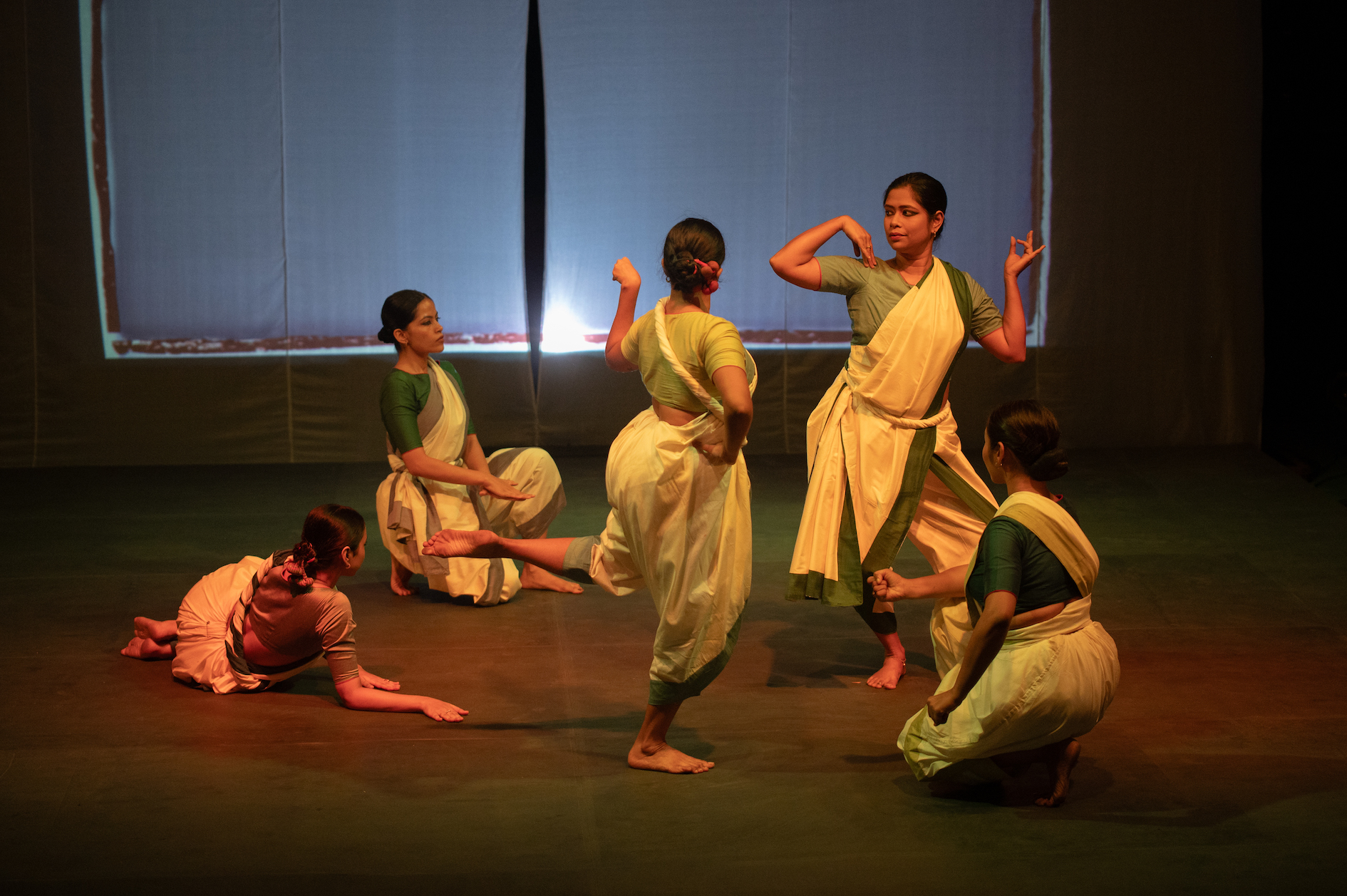
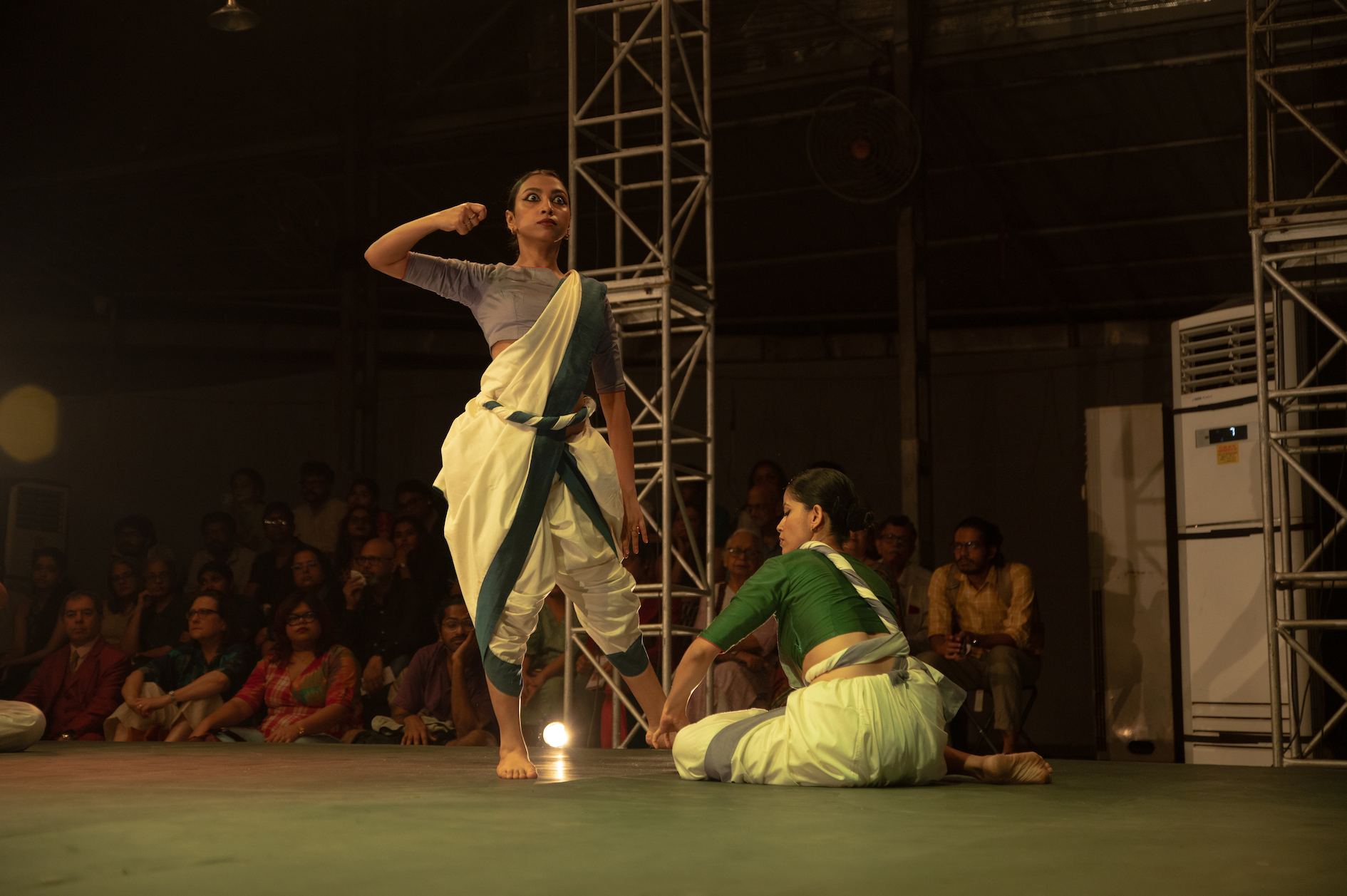
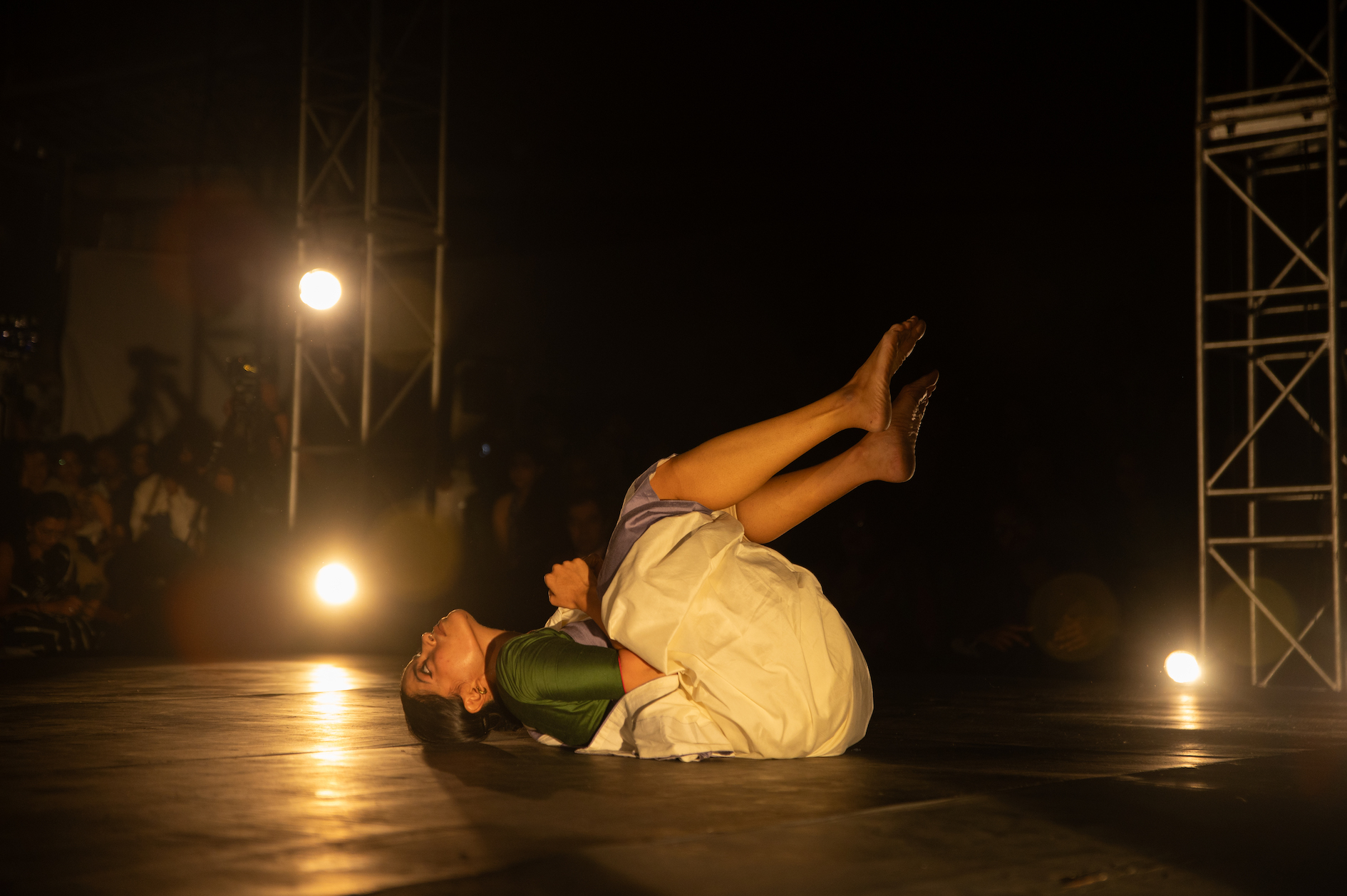
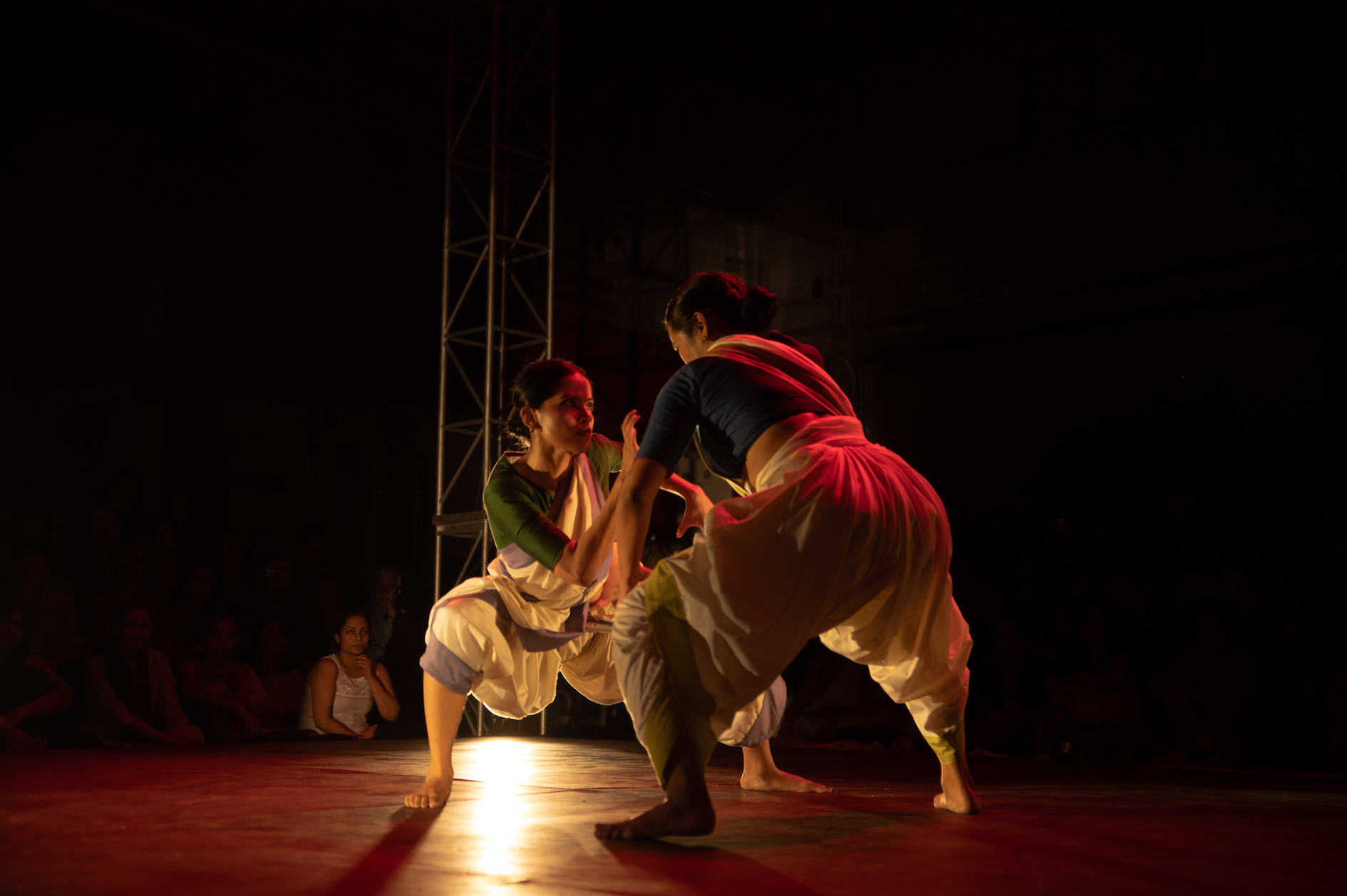
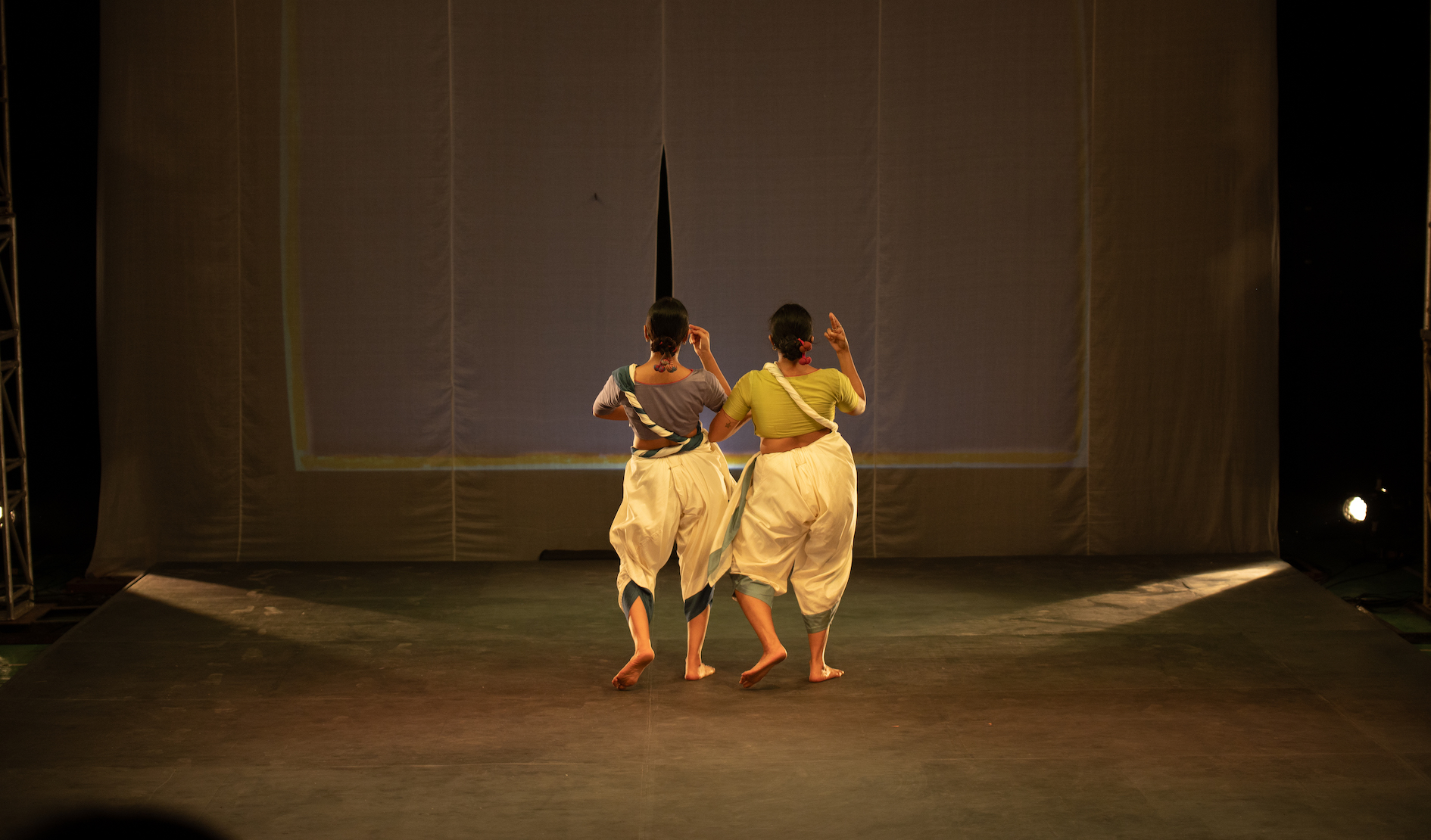
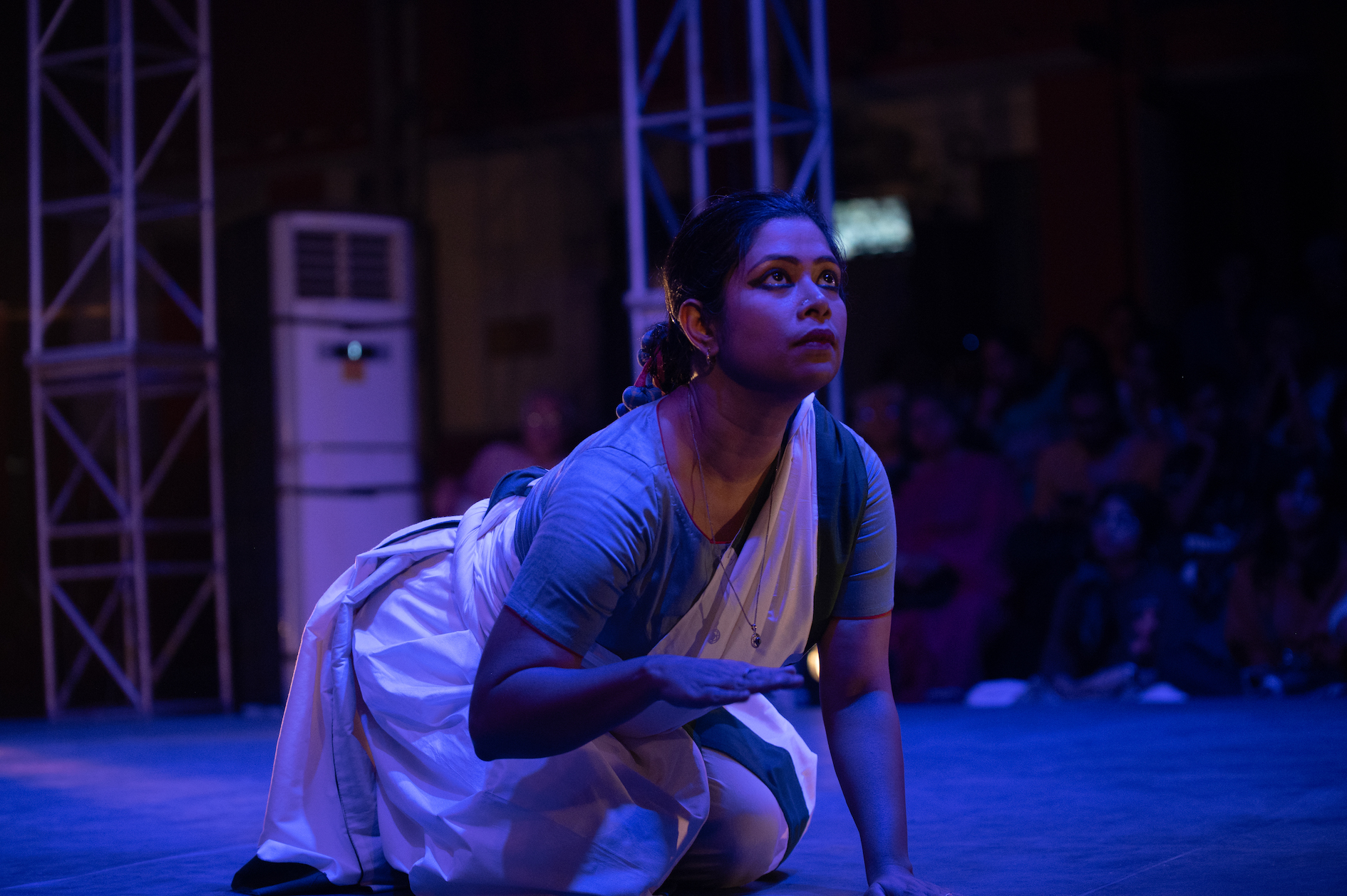
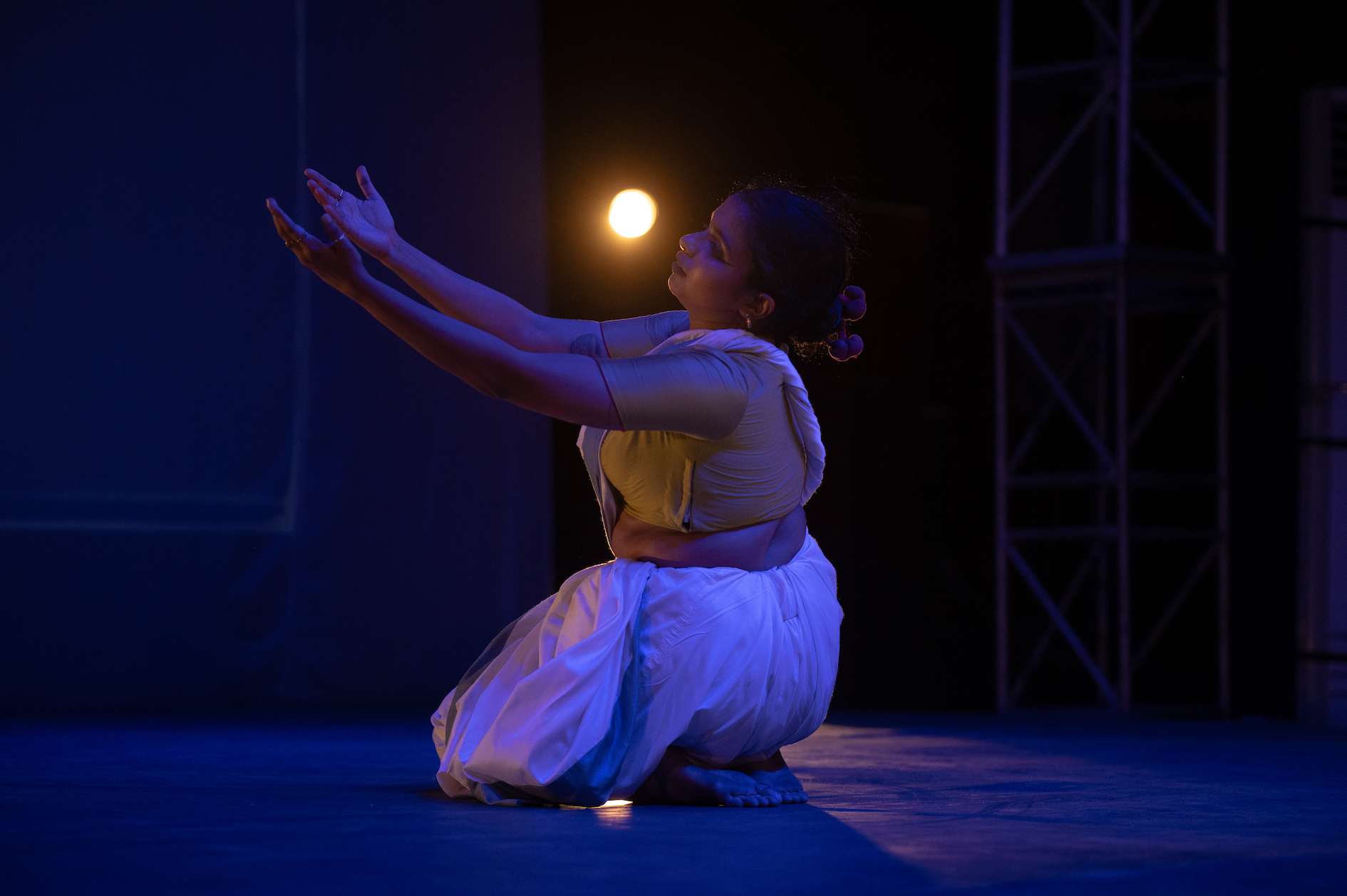
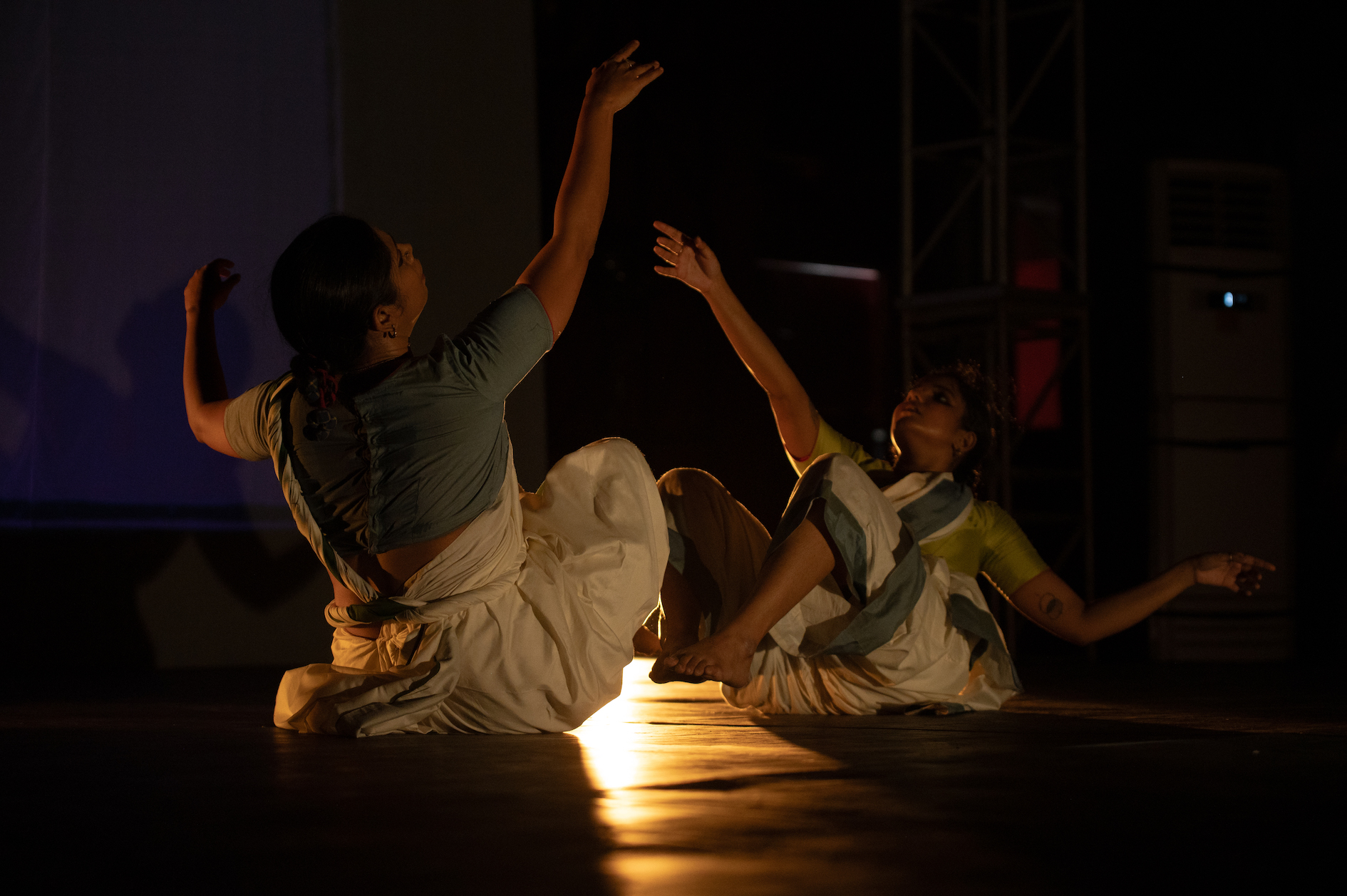
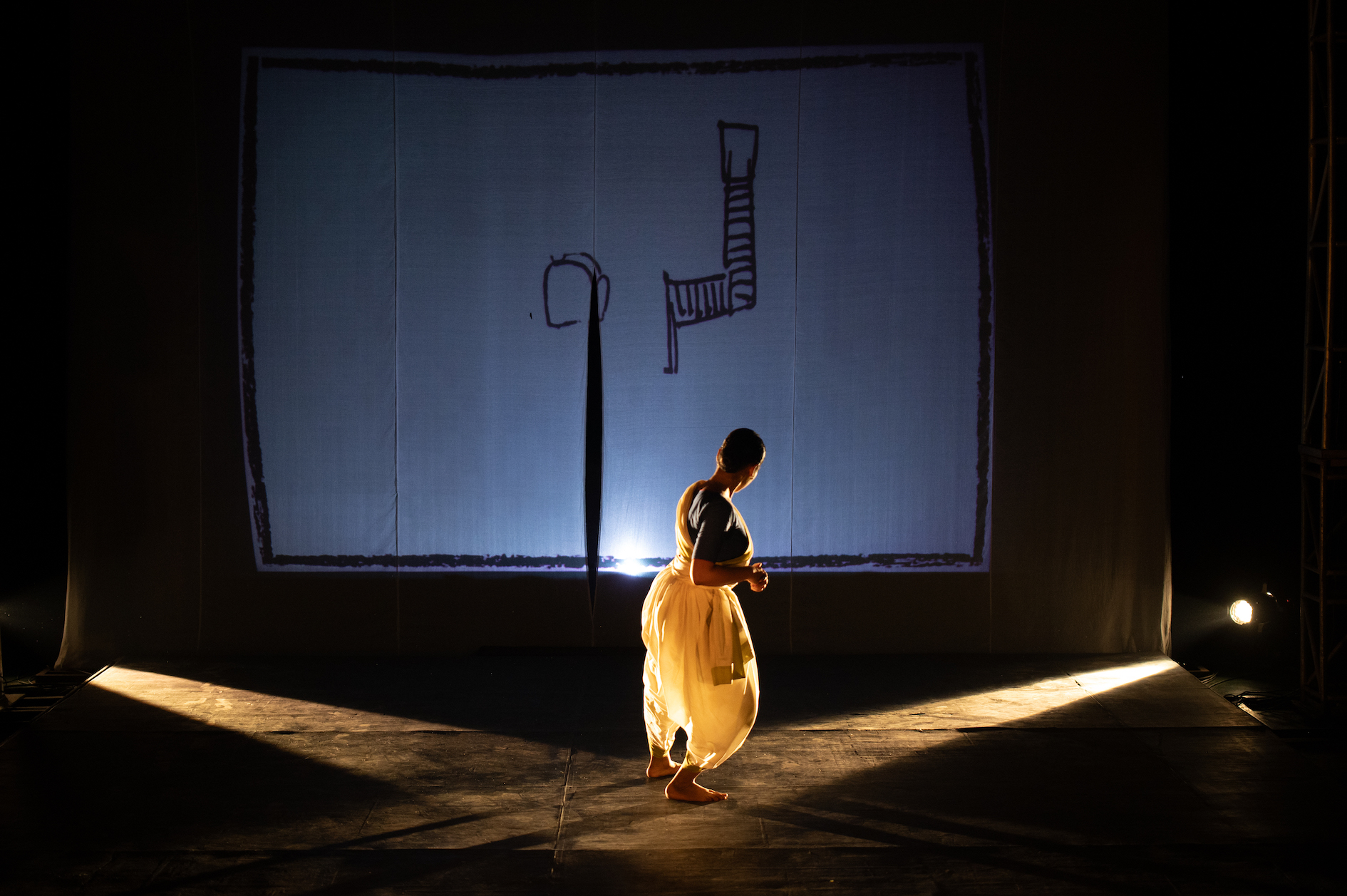
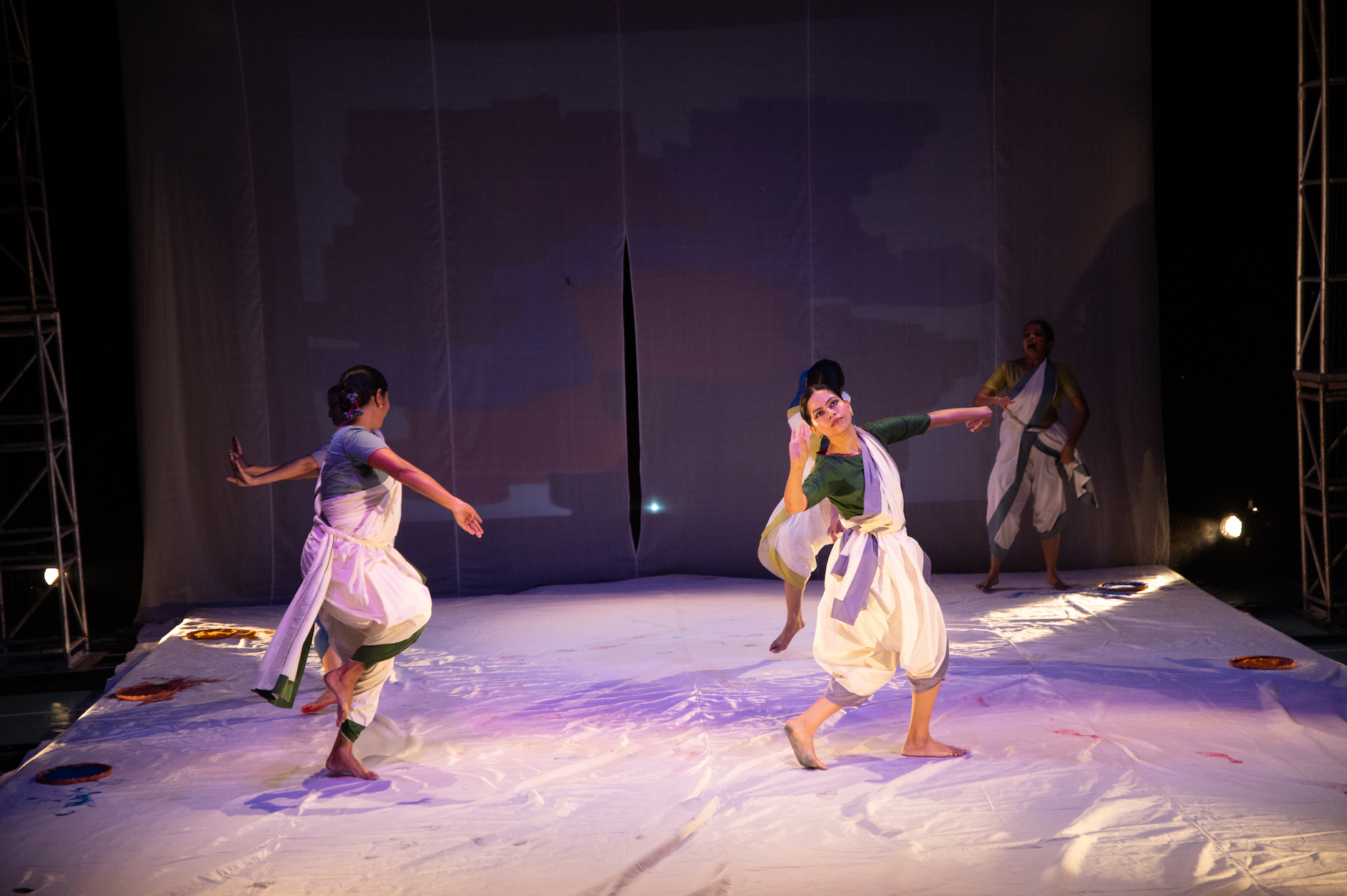
“Roy’s familiar figures were treated with delightful whimsy,
their bold outlines translated into kinetic form with clarity and verve. [ ]
Beral Teral Ityadi was, in the end, what the best acts of homage always are,
which is not a reverent iconification,
but a quest into a living, human inheritance.”
Kathakali Jana, The Telegraph Calcutta, April 2026
read the full review here
Some years ago, Delhi Art Gallery acquired the home of celebrated artist Jamini Roy from his family. This house in Ballygunje Place, Calcutta was where the artists lived and worked for most of his life. Some months later, Sumona Chakravarty who heads the Museums Division of DAG based in Calcutta, reached out to me about creating a performance piece responding to the artist’s work and philosophy. I was intrigued: Jamini Roy’s work and stamp is ubiquitous in the Bengali consciousness and this can be seen across the city – perhaps no other artist is so visible in everyday life, whether people know his name or not. It took some years for the project to take off, but when it did it came together in a short span of 8-9 months, culminating in two performances of Beral Teral Ityadi in April 2026, marking the artist’s birthday.
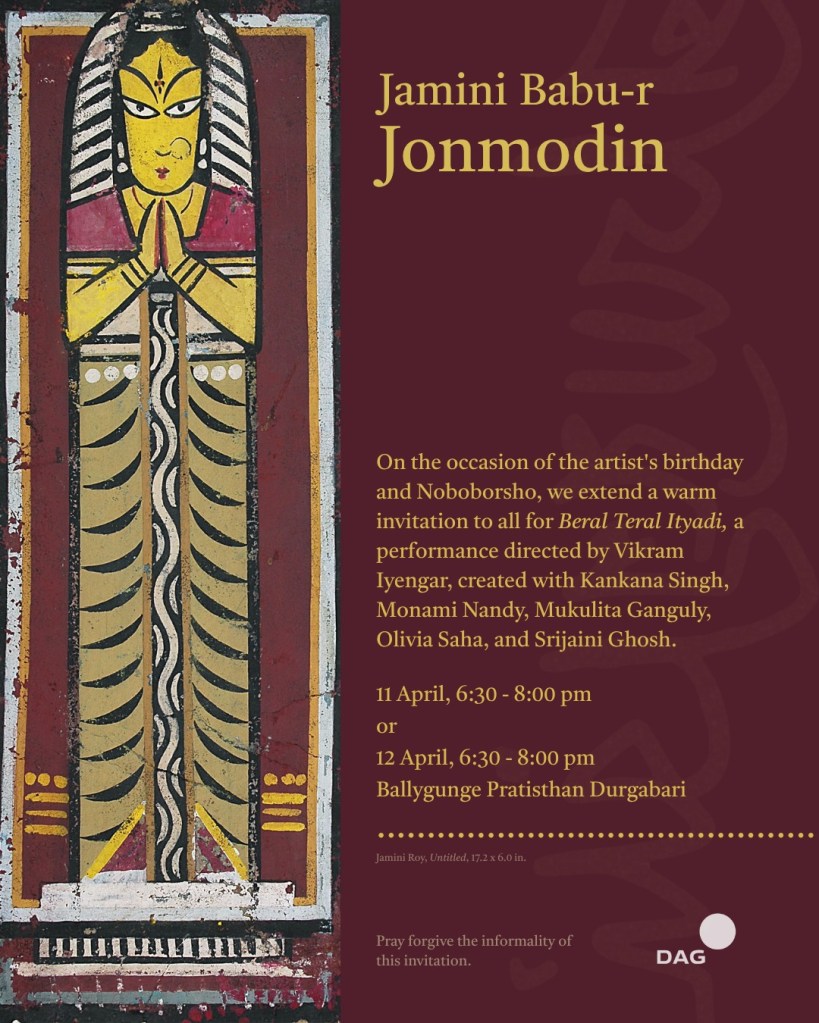
Jamini Roy’s work is embedded within the cultural imagination of the city in a way that is unparalleled and unique. From wedding cards, restaurant menus, ad campaigns and building facades to stock images in new photo frames, the urban visual culture of the city is brimming with imprints of his visual language. This ubiquity can be traced to how consciously and creatively his practice draws from the everyday—motifs inspired by alpona, dolls, idols and a style inspired by pats, temple friezes, brata art and crafts. His iconic oeuvre draws from these everyday recognisable practices and perhaps in doing so, has pervaded our everyday cultural consciousness in the city with ease and intimacy. Beral teral ityadi, playfully navigates this familiarity by approaching the recognisable themes and motifs in the artworks presented here with a sense of wonder and whimsy.
This project brought me back to creating a devised movement piece in my home city after quite a long gap, and with a group of five young women dancers I had not worked with before, all five from very different dance backgrounds – none of them kathak. The process for Beral Teral Ityadi began with a weekend workshop with members of DAG who took us all on a deep dive into Jamin Roy’s work and philosophy, exploring questions about why he seemed so familiar, what made his work so accessible, the debates for and against his playful chosen style, and his deep conviction that art belonged to everyone. The textures of playfulness, laughter and child-like delight became the guiding lights for our creative journey, that was collectively designed and mapped through a variety of improvisations and provocations I brought into the rehearsal space. What emerged was a joyful and quirky piece celebrating the contemporary relevance of Jamini Roy through movement, music and visual design, where figures from his paintings – beloved cats and iconic women – left their two dimensional frames and played among the audiences for a while.
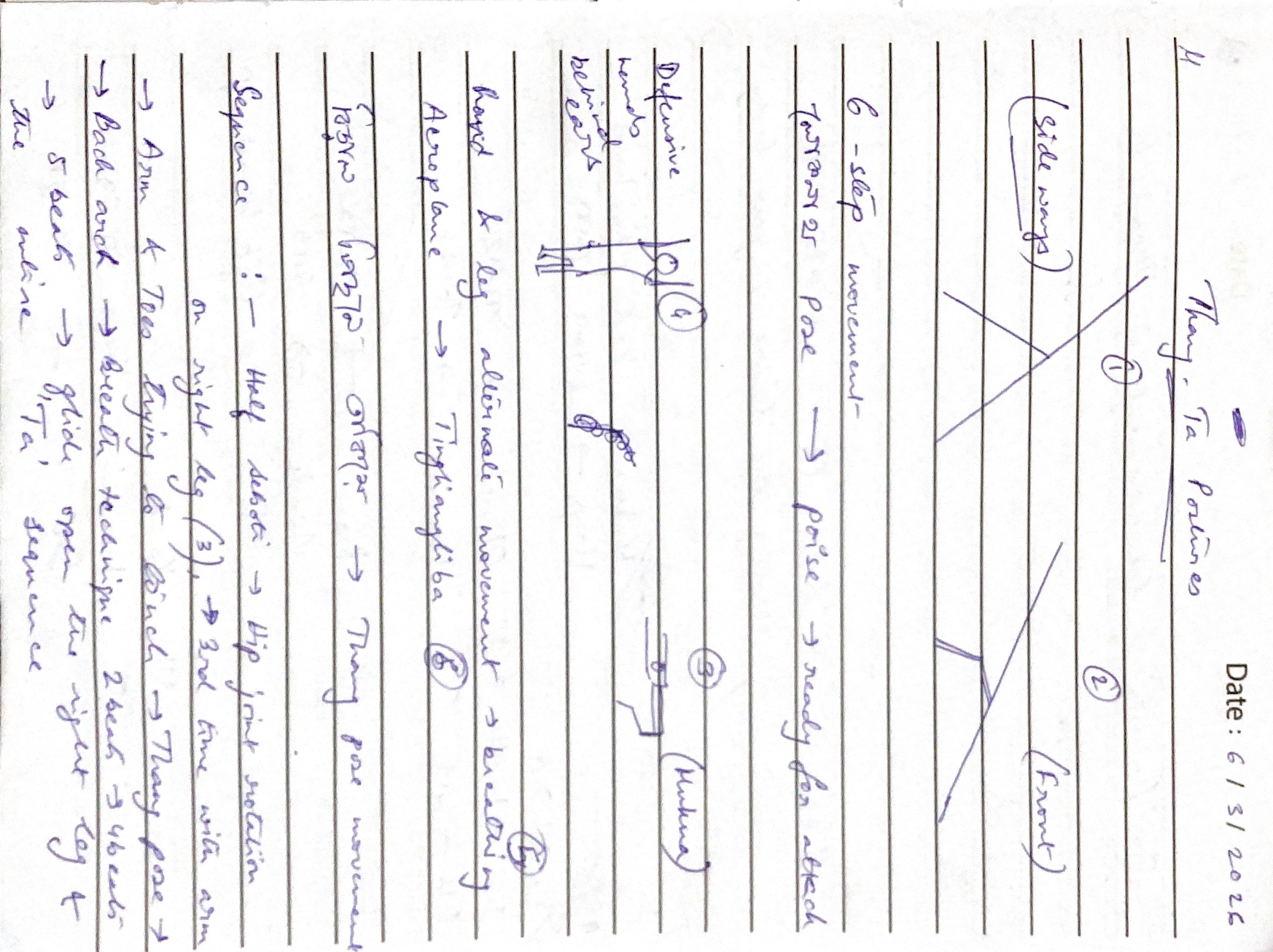
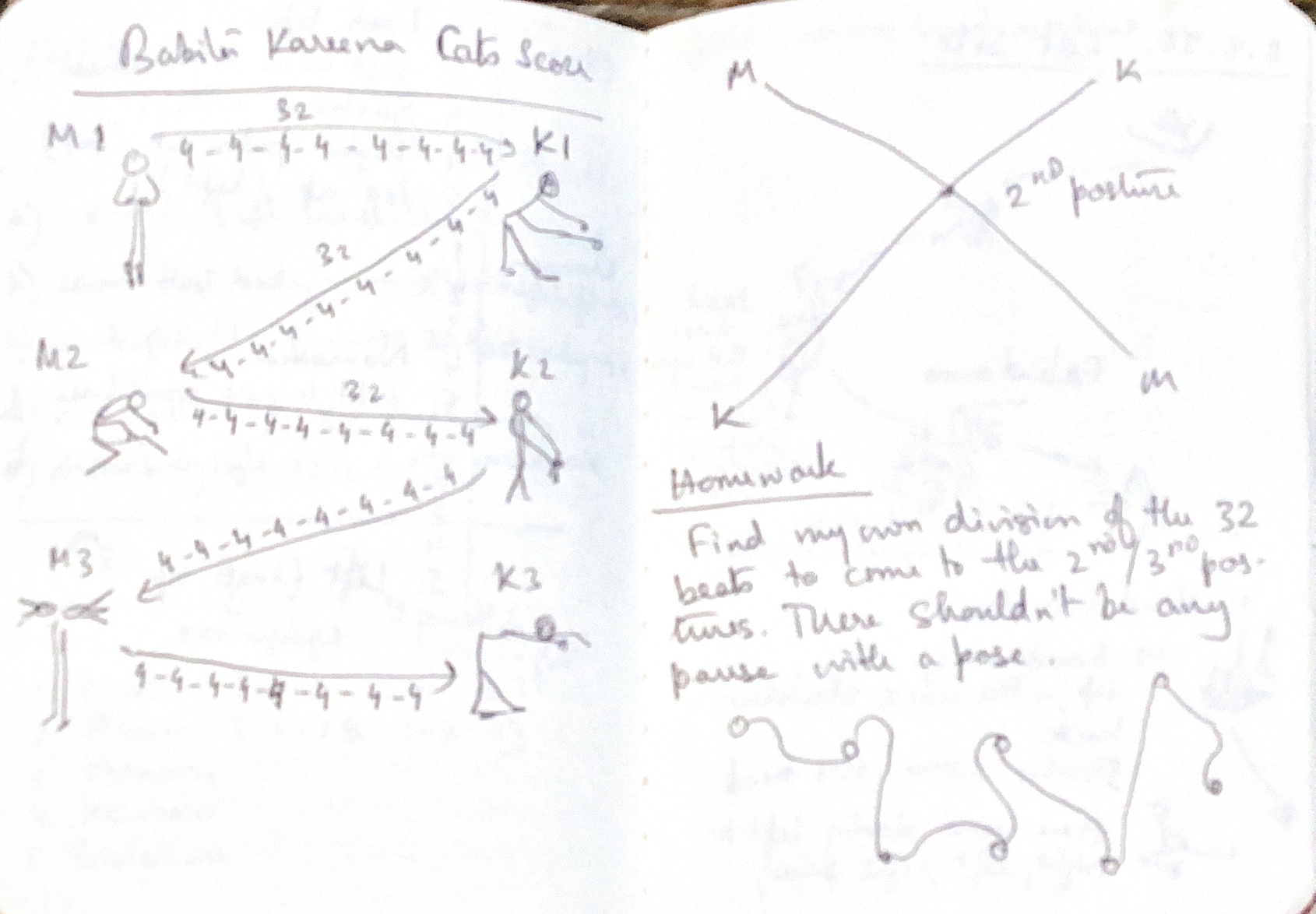
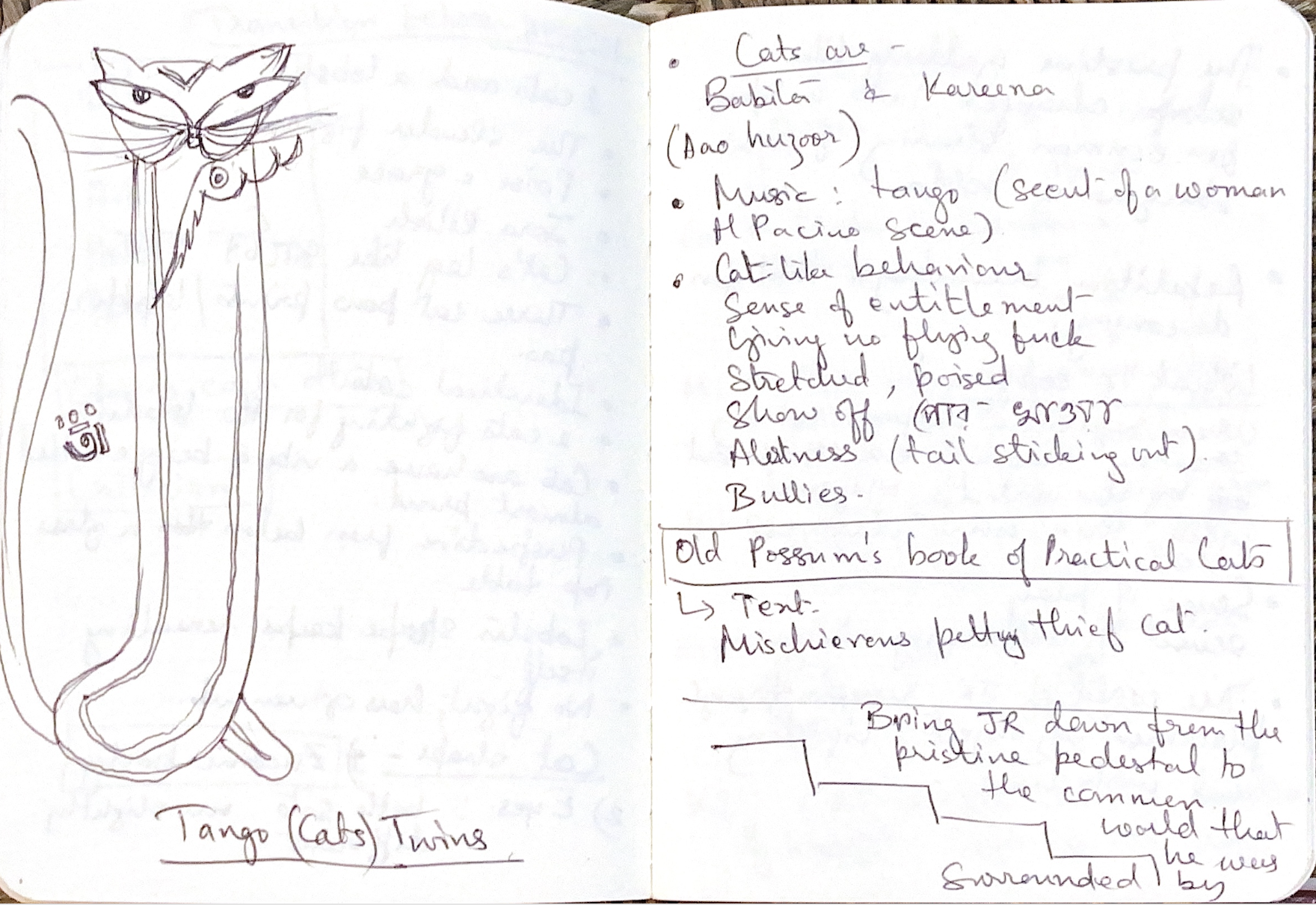
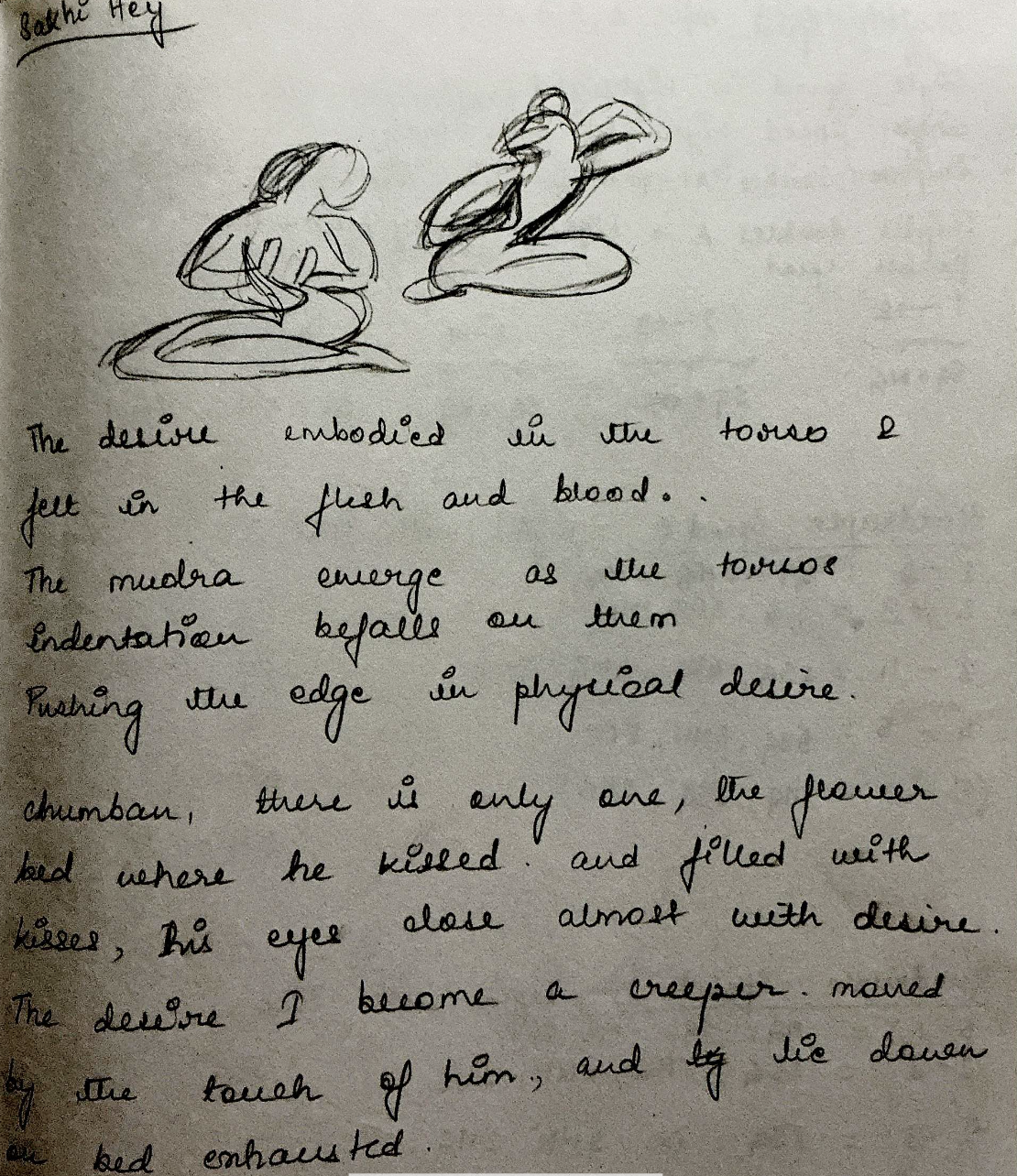
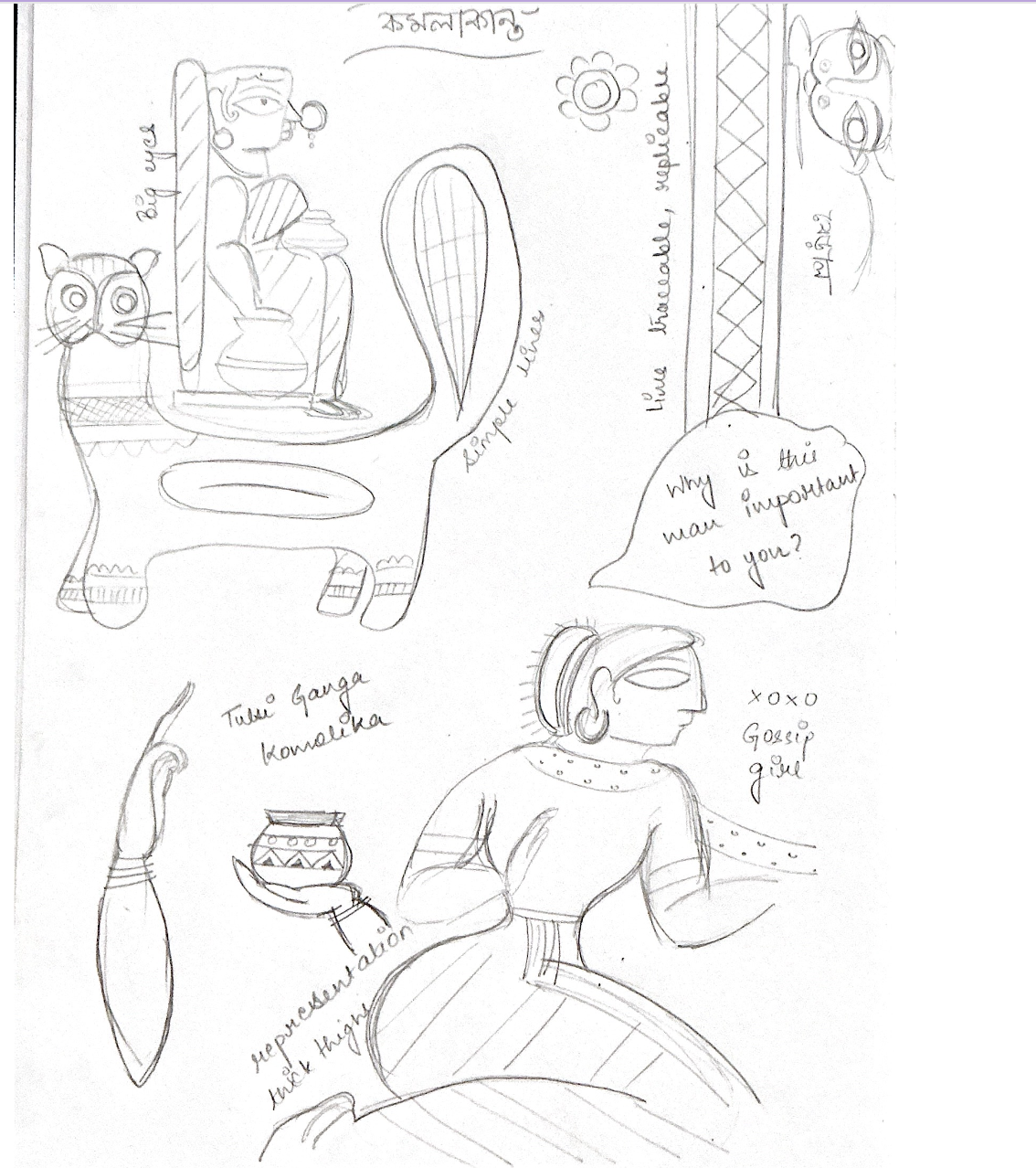
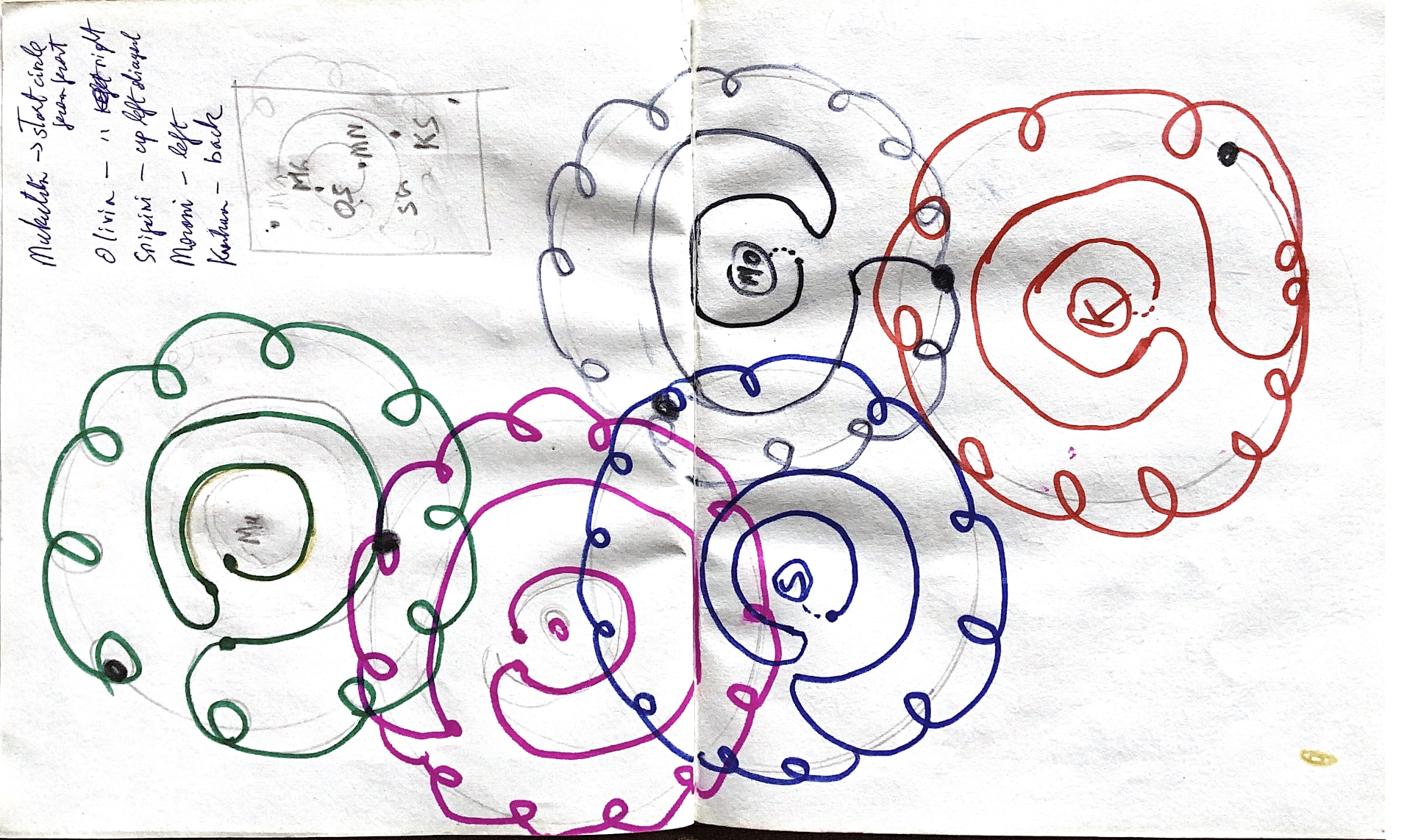
[pages from our rehearsal diaries with notes, choreographic diagrams, and inspirations]
CREDITS
Concept and Direction
Created with
Lighting Design and Execution
Sound Design
Vocals
Text Renditions
Projection Design
Production Management
Texts Referenced in Audio Voiceovers
Research
Vikram Iyengar
Kankana Singh, Monami Nandy, Mukulita Ganguly, Olivia Saha, Srijaini Ghosh
Sudip Sanyal
Sourjyo Sinha, Rohit Ganesh
Rajeshwari Ganguly Banerjee
(The rendition of Sakhi He is inspired by an original composition by Jayaram Parameswaran, and used with thanks to Priyadarshini Ghosh Shome)
Dana Roy, Vikram Iyengar
Kunal Chakraborty
Aopala Banerjee, Anirudh Raman
Subramanyan, K.G., Folk Art & the Modern Artist in India. India, 1969, accessed via Asia Art Archive in India.
Jyotirmoy Bhattacharya, ed. Jamini Roy: Candid Sketches, 2019.
Sandip Sarkar, Jamini Roy: His Life in Art, 2013
Shreeja Sen, Sumona Chakraborty, Ananya Bhattacharya of the DAG team

